In clinical practice, the term “heart problem” encompasses a broad spectrum of cardiovascular disorders that affect the structure, electrical conduction system, or blood supply of the heart. These conditions include Coronary Artery Disease (CAD)—where plaque buildup narrows the arteries—alongside cardiac arrhythmias (irregular heartbeats), structural valvular defects, cardiomyopathies (weakened heart muscle), and chronic heart failure. While some cardiac conditions present acutely as medical emergencies, many develop progressively over years due to underlying metabolic factors.
In Patna and across Bihar, the prevalence of cardiovascular disorders is closely linked to rising rates of hypertension, Type 2 diabetes, dyslipidemia, and sedentary lifestyles. Effectively treating a heart problem requires accurate diagnostic categorization to determine whether a patient needs pharmacological management, minimally invasive catheter-based intervention, or cardiothoracic surgery.
For patients and families seeking structured medical care for cardiovascular conditions, the Ford Hospital network provides an integrated clinical ecosystem. In strict adherence to the National Medical Commission (NMC) guidelines regarding factual, transparent, and evidence-based medical communication, the following is an objective overview of our network’s healthcare facilities designed to diagnose and treat heart problems, structured sequentially by their role in comprehensive inpatient care, targeted interventional procedures, and outpatient management.
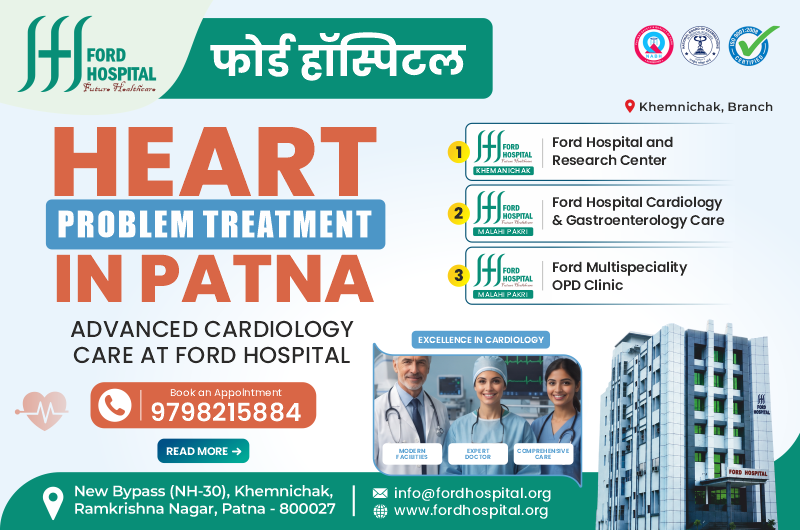
Effectively managing the diverse range of heart problems requires a multidisciplinary continuum of care. Clinical services are delivered across three dedicated facilities within the network, prioritizing tertiary surgical and emergency infrastructure, specialized interventional cardiology, and long-term outpatient monitoring.
Functioning as the primary multispeciality inpatient, surgical, and emergency center of the network, Ford Hospital & Research Center (located near New Bypass, Khemnichak, Patna) serves as the central hub for managing complex, severe, or acute heart problems that require hospital admission and multidisciplinary support.
When a heart problem manifests as an acute coronary event, severe decompensated heart failure, or a structural defect requiring open-heart surgery, comprehensive inpatient infrastructure is essential.
Multidisciplinary Clinical Directory at Ford Hospital:
Operating as a focused dual-specialty facility, Ford Hospital Cardiology & Gastroenterology Care (located at Malahi Pakri, Kankarbagh, Patna) is structured to manage targeted catheter-based cardiac interventions, electrical rhythm disorders, and intersecting metabolic or digestive complications.
Explore Our Dedicated Core Services:
Most chronic heart problems—such as essential hypertension, stable angina, mild valvular regurgitation, and compensated heart failure—are managed primarily on an outpatient basis. The Ford Multispeciality OPD Clinic serves as the primary access point for early diagnosis, medical therapy optimization, and post-procedural follow-up.
Outpatient Specialty Directory:
Managing the diverse spectrum of heart problems requires diagnostic accuracy and coordination between clinical cardiologists, interventional specialists, and cardiothoracic surgeons. In compliance with NMC guidelines prohibiting superlative rankings of medical practitioners, Ford Hospital provides a team of experienced clinicians focused on standardized, evidence-based care:
Because different cardiovascular conditions affect the heart in distinct ways, symptoms can vary significantly. Individuals experiencing any of the following warning signs should seek prompt medical evaluation:
Cardiovascular specialists utilize a structured, step-wise clinical approach to treat heart problems based on severity and etiology:
1. Do all heart problems require surgery or stenting?
No. Many cardiovascular conditions—including early-stage coronary artery disease, hypertension, mild valvular issues, and certain arrhythmias—can be managed effectively with targeted medications, dietary changes, and regular outpatient monitoring without invasive procedures.
2. How does a cardiologist decide between medication, angioplasty, and bypass surgery?
The clinical decision is based on diagnostic findings, such as the number and location of blocked arteries on an angiogram, the heart’s pumping efficiency (ejection fraction) on an echocardiogram, and the presence of comorbidities like diabetes. Single- or double-vessel blockages are often treated with stenting, whereas complex triple-vessel blockages may require bypass surgery (CABG).
3. What is the difference between a heart attack and heart failure?
A heart attack (myocardial infarction) is a sudden medical emergency where blood flow to a part of the heart muscle is akutly blocked by a clot. Heart failure is typically a chronic condition where the heart muscle gradually becomes too weak or stiff to pump blood efficiently throughout the body.
4. Does the hospital provide 24/7 care for sudden cardiac emergencies?
Yes. Ford Hospital maintains a 24/7 emergency department supported by Intensive Coronary Care Units (ICCU), an active Cath Lab, and on-call cardiologists to manage acute heart attacks, severe arrhythmias, and sudden heart failure exacerbations at any hour.
5. Is cashless hospitalization available for cardiac treatments and surgeries?
Ford Hospital operates a dedicated Third-Party Administrator (TPA) and Insurance coordination desk that facilitates cashless admissions for diagnostic angiographies, angioplasties, device implantations, and bypass surgeries under recognized private insurers and eligible government healthcare schemes, subject to standard policy terms.