Heart failure is a chronic, progressive condition in which the heart muscle is unable to pump enough blood to meet the body’s need for blood and oxygen. Unlike a sudden heart attack, heart failure typically develops gradually over time, often as a secondary complication of underlying conditions such as severe hypertension, coronary artery disease, structural valve defects, or diabetes.
In Patna and across Bihar, the rising prevalence of metabolic disorders has contributed to a growing incidence of both acute decompensated heart failure and chronic heart failure. Managing this complex condition requires a structured, evidence-based approach, combining Guideline-Directed Medical Therapy (GDMT), continuous hemodynamic monitoring, and, when necessary, advanced device implantations or surgical interventions. Clinical guidelines emphasize the early initiation and careful titration of specific medication combinations to improve cardiac function and reduce hospitalization rates.
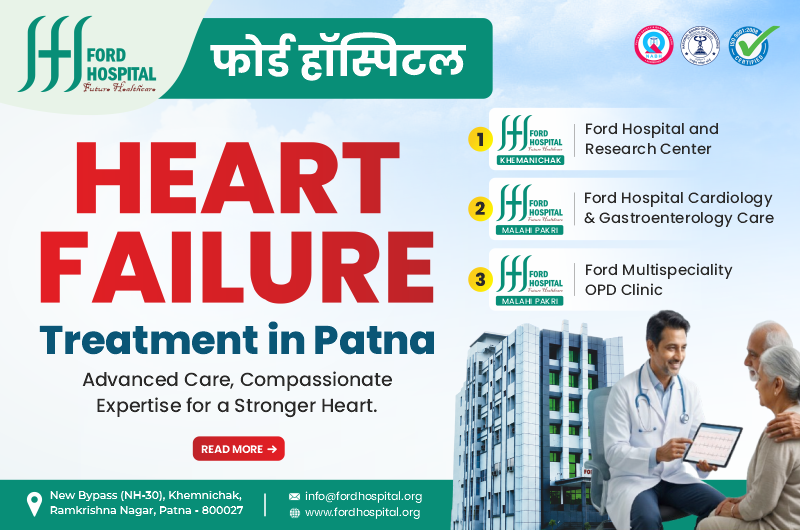
For patients seeking structured medical management for heart failure, the Ford Hospital network provides a comprehensive clinical ecosystem. In strict adherence to the National Medical Commission (NMC) guidelines regarding factual, transparent, and evidence-based medical communication, the following is an objective overview of our network’s healthcare facilities designed to support heart failure management.
Effectively treating heart failure requires a multidisciplinary approach, as the condition frequently leads to secondary complications in the kidneys (cardiorenal syndrome), lungs, and liver. Care is delivered across three dedicated facilities within the network, structured to address acute stabilization, specialized interventions, and long-term outpatient management.
Functioning as the primary multispeciality inpatient center of the network, Ford Hospital & Research Center (located near New Bypass, Khemnichak, Patna) provides the intensive care and surgical infrastructure necessary for managing acute decompensated heart failure. When a patient experiences severe fluid overload (pulmonary edema) or cardiogenic shock, this facility offers the critical multidisciplinary support required for immediate stabilization.
Multidisciplinary Clinical Directory at Ford Hospital:
Operating as a focused specialty facility, Ford Hospital Cardiology & Gastroenterology Care (located at Malahi Pakri, Kankarbagh, Patna) is structured to manage targeted interventions and intersecting metabolic complications associated with advanced heart failure.
Explore Our Dedicated Core Services:
The long-term management of chronic heart failure relies heavily on careful outpatient monitoring, medication titration, and patient adherence to lifestyle modifications. The Ford Multispeciality OPD Clinic serves as the primary access point for routine cardiovascular follow-ups and Guideline-Directed Medical Therapy (GDMT) optimization.
Outpatient Specialty Directory:
The clinical management of heart failure requires careful diagnostic monitoring and an evidence-based approach to medication and device therapy. Ford Hospital’s cardiovascular team includes experienced clinicians:
Patients diagnosed with heart failure, or those at high risk, must monitor for signs of acute decompensation. Individuals experiencing the following symptoms should seek immediate medical evaluation at an emergency center, such as the 24/7 Emergency Wing at Ford Hospital & Research Center:
Cardiovascular specialists recommend strict adherence to medical protocols and lifestyle modifications to manage heart failure effectively:
1. How is heart failure diagnosed at Ford Hospital?
Diagnosis is confirmed through a combination of clinical evaluation, blood tests (such as BNP or NT-proBNP), 12-lead ECG, and 2D Echocardiography, which measures the heart’s ejection fraction (pumping efficiency).
2. Can heart failure be completely cured?
Heart failure is a chronic condition that currently has no absolute cure. However, with appropriate medical management, device therapies, and lifestyle modifications, symptoms can be effectively controlled, and the progression of the disease can be significantly slowed.
3. What is a CRT or ICD device?
Cardiac Resynchronization Therapy (CRT) is a specialized pacemaker that helps the lower chambers of the heart beat in coordination. An Implantable Cardioverter-Defibrillator (ICD) is a device that monitors for life-threatening arrhythmias and delivers a shock to restore a normal rhythm.
4. Why is kidney function monitored during heart failure treatment?
The heart and kidneys are highly interconnected. Medications used to treat heart failure, particularly diuretics, affect fluid volumes and renal function. Regular blood tests are required to ensure the kidneys remain stable during therapy.
5. How can I schedule a consultation for heart failure management?
Outpatient and specialty consultations can be scheduled through the Ford Hospital reception desk, via the central coordination contact at +91 9798215884, or through the official website portal.