In medical terms, a “weak heart” refers to conditions such as cardiomyopathy or heart failure with reduced ejection fraction (HFrEF). This occurs when the heart muscle becomes enlarged, thick, or rigid, losing its ability to pump a sufficient volume of oxygen-rich blood to the rest of the body. A weakened heart is typically a progressive condition, often developing as a secondary complication of chronic high blood pressure, coronary artery disease, previous heart attacks, structural valve defects, or unmanaged diabetes.
In Patna and across Bihar, managing a weakened heart muscle requires a highly structured, long-term clinical approach. This involves Guideline-Directed Medical Therapy (GDMT), regular monitoring of the heart’s pumping efficiency (ejection fraction), and, for advanced stages, the implantation of specialized cardiac devices or structural surgeries.
For patients and families seeking structured medical management for cardiac dysfunction, the Ford Hospital network provides a comprehensive clinical ecosystem. In strict adherence to the National Medical Commission (NMC) 2026 guidelines regarding factual, transparent, and evidence-based medical communication, the following is an objective overview of our network’s healthcare facilities designed to evaluate and treat a weak heart, structured by their role in intensive, interventional, and long-term care.
Effectively treating a weakened heart muscle requires a multidisciplinary continuum of care. Because a weak heart often impacts fluid balance and renal function, care is delivered across our network’s dedicated facilities, emphasizing acute stabilization, device-based interventions, and strict outpatient monitoring.
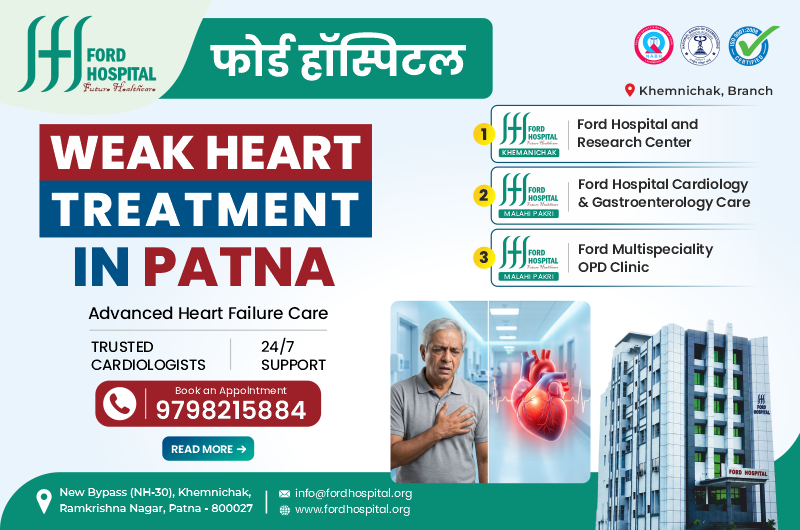
Functioning as the primary multispeciality inpatient and intensive care center of the network, Ford Hospital & Research Center (located near New Bypass, Khemnichak, Patna) provides the advanced infrastructure necessary for managing acute decompensation—episodes where a weak heart suddenly fails to manage the body’s fluid load, leading to severe breathlessness.
Multidisciplinary Clinical Directory at Ford Hospital:
Operating as a focused interventional specialty facility, Ford Hospital Cardiology & Gastroenterology Care (located at Malahi Pakri, Kankarbagh, Patna) is structured to manage targeted device interventions that help synchronize and support a weakened heart muscle.
Explore Our Dedicated Core Services:
The foundational management of a weak heart relies heavily on careful, continuous outpatient monitoring, precise medication titration, and patient adherence to lifestyle modifications. The Ford Multispeciality OPD Clinic serves as the primary access point for routine cardiovascular follow-ups and long-term stabilization.
Outpatient Specialty Directory:
The clinical management of a weak heart requires careful diagnostic monitoring and an evidence-based approach to medication and device therapy. In compliance with NMC guidelines prohibiting superlative descriptions, Ford Hospital provides a team of experienced clinicians focused on standardized patient care:
Patients diagnosed with a weak heart, or those at risk, must monitor for signs of acute fluid overload (decompensation). Individuals experiencing the following symptoms should seek immediate medical evaluation at an emergency center:
Cardiovascular specialists recommend strict adherence to medical protocols and lifestyle modifications to support heart function and reduce hospital admissions:
1. How is a “weak heart” diagnosed clinically?
Diagnosis is confirmed through a combination of clinical evaluation, blood tests (such as BNP markers), and most importantly, a 2D Echocardiogram, which measures the heart’s Ejection Fraction (the percentage of blood leaving the heart each time it contracts). An ejection fraction below 40% typically indicates a weakened heart muscle.
2. Can a weak heart be cured completely?
In most cases, a weak heart is a chronic condition that is managed rather than completely cured, unless it is caused by a reversible issue (like a viral infection or a correctable valve defect). With appropriate medical management and device therapies, symptoms can be effectively controlled and the heart’s pumping efficiency can sometimes improve.
3. What is a CRT device and how does it help a weak heart?
Cardiac Resynchronization Therapy (CRT) is a specialized biventricular pacemaker. In some patients with a weak heart, the lower chambers (ventricles) do not beat at the exact same time. A CRT device sends tiny electrical impulses to both lower chambers so they beat together in a more synchronized, efficient manner.
4. Why do I need to monitor my weight if my heart is weak?
A weak heart struggles to pump blood effectively to the kidneys, causing the body to retain salt and water. Sudden weight gain (like 2 kg over two days) is often the very first sign of fluid buildup, occurring before you even notice swelling in your legs or shortness of breath.
5. Is cashless hospitalization available for cardiac device implantations?
Ford Hospital operates a dedicated Third-Party Administrator (TPA) and Insurance coordination desk that works with recognized private insurers and eligible government healthcare schemes to facilitate cashless procedures for device implantations, subject to policy terms.